
Image, Art, Practices and Education: Triple Book Presentation by ArtEZ Press and Valiz

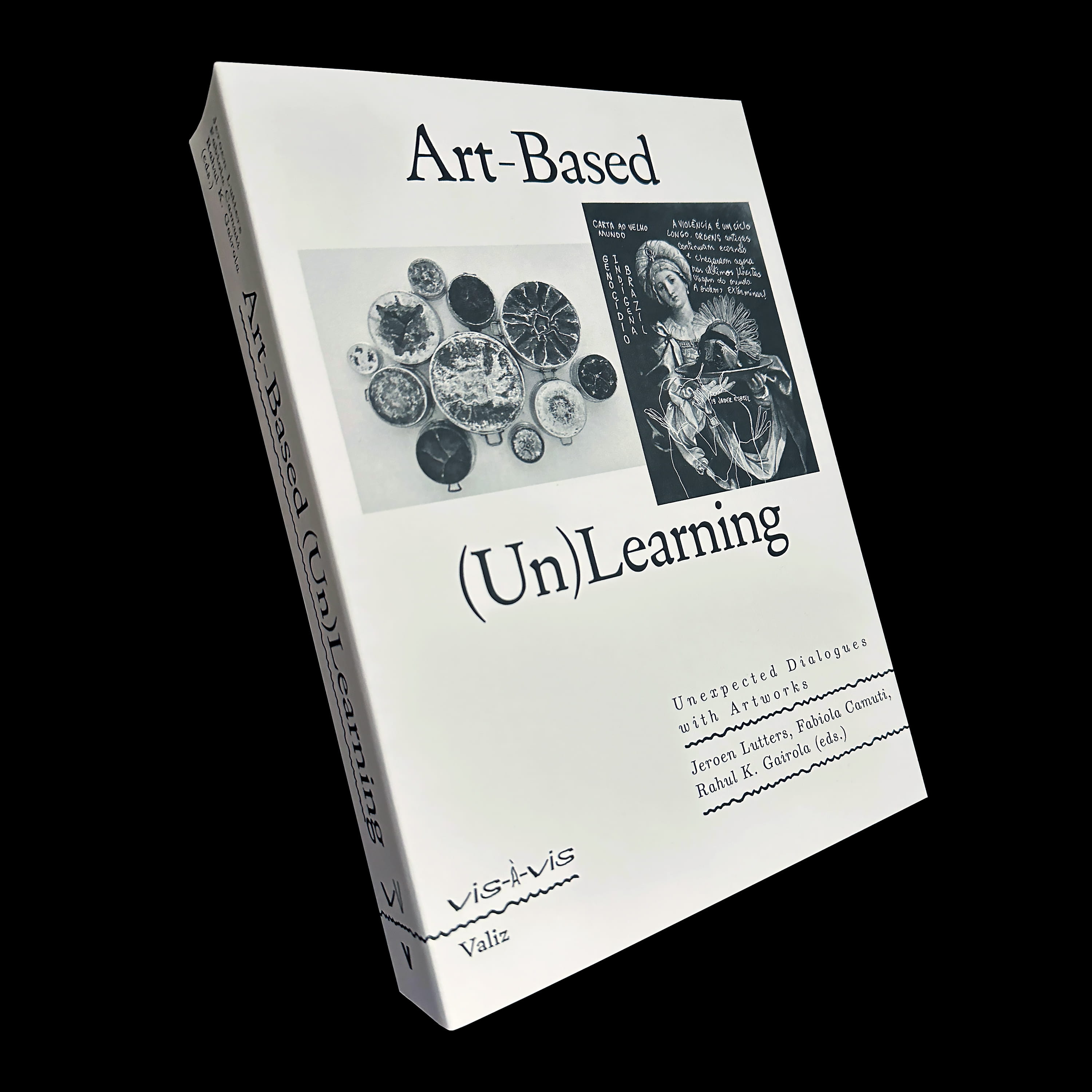
- Triple book presentation in collaboration with ArtEZ Press
- With Art-Based (Un)Learning authors and editor Marc Boumeester and Jeroen Lutters, among many others
What: Triple book presentation/panel
Where: Theater De Spiegel, Spinhuisplein 14, Zwolle, The Netherlands
When: Wednesday 18 November, 10.00–11.30
Language: English
Admission: Accessible to ticketholders of ELIA conference
In times of constant acceleration, fragmentation, and erosion of collectivity, art education can be a space that is open to deceleration, care, and proximity. In this special triple book presentation, the authors of three books will talk about their reflections on our current predicament, troubling traditional notions of the image, art and education. In reaction to the system of short-lived attention, (visual) exhaustion, and lack of collectivity, these books explore ways in which art education can propose alternative ways of looking, thinking and making.
Speakers: Jeroen Lutters, Marc Boumeester, Minke Vos, Gijs Assmann, Laura van Grinsven, Edward Thomson, Angela Jerardi; more TBA.
Moderator: Astrid Vorstermans
About the books:
- The Aesthetics of Obsolescence: Synthetic Desire and the Ontogenesis of the Image (ArtEZ Press, 2026) explores how the nature of the image is being fundamentally transformed in the age of synthetic media, algorithmic circulation, and platform capitalism.
- The five-book series Polyphony in Practice: Ways of Thinking, Making and Teaching (ArtEZ Press, 2026) specifically focusses on the intersection of art and education. Through tactile exercises, embodied methods, and speculative propositions, the series asks what art and imagination can teach us about ourselves and our worlds, and asks what collective creative habits we might cultivate for a more just and livable present.
- Through a wide-ranging selection of essays, Art-Based (Un)Learning: Unexpected Dialogues with Artworks (Valiz, 2026) explores how open, reversible, respectful pedagogies can lead to creative thinking, to open minds, and to building critical, communicative citizenship across borders.